ByJohn A
How Far Can A Concrete Boom Pump Reach?
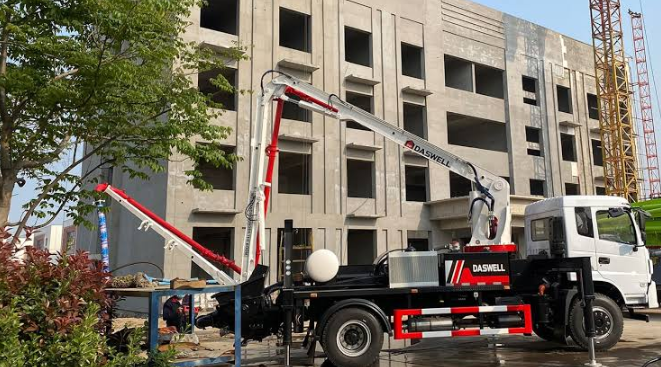
Concrete boom pumps can place concrete tens of metres above, across, or below a truck, but the exact reach depends on the boom model and the truck position. If you are planning concrete boom pump hire, understanding reach is the difference between a pump that works for your site and one that falls short. Typical booms range from compact 20–28 m models for smaller sites to 47–56 m models for large commercial work. A 28 m boom offers around 78 ft of horizontal and 91 ft of vertical reach, while a 56 m boom can reach around 168 ft horizontally and 182 ft vertically.
1. Concrete Boom Pump Reach by Size
These figures are examples rather than universal ratings. Always use the rental company’s or manufacturer’s reach chart for the exact model.
| Boom size | Typical vertical reach | Typical horizontal reach | Common project fit |
| 20–24 m | ~65–80 ft | ~55–70 ft | House slabs, pools, tight residential sites |
| 28 m | ~90 ft | ~78 ft | Residential foundations, low-rise work |
| 32 m | ~105 ft | ~92 ft | Larger residential and light commercial |
| 36 m | ~118 ft | ~105 ft | Commercial slabs, elevated work |
| 40 m | ~130–137 ft | ~122 ft | Multi-storey or larger commercial projects |
| 47 m | ~154 ft | ~138 ft | Larger commercial and difficult-access placements |
| 52 m | ~170 ft | ~150 ft | Major commercial, industrial, or infrastructure |
| 56 m | ~182 ft | ~168 ft | High-reach or obstacle-heavy placements |
2. What Reach Means on a Boom Pump
Reach is described in three directions, and all of them matter depending on the job.
Vertical Reach
Vertical reach is the maximum height the boom can place concrete above the pump truck. It covers:
- Upper floors and elevated slabs
- Walls, decks, and bridges
- Tall structures where placing from ground level is impossible
Vertical reach reduces when the boom must also extend outward around an obstacle, so the two directions are rarely achievable simultaneously.
See also: How Peer-to-Peer Crypto Transactions Work
Horizontal Reach
Horizontal reach is the maximum distance the boom can place concrete from the truck at roughly the same elevation. This applies to wide slabs, long foundations, backyard pours, bridge decks, and sites with limited truck access. Horizontal reach is measured from the boom’s operating geometry rather than the edge of the truck, so confirm the figure on the reach chart.
Depth Reach
Depth reach is the distance the boom can extend below truck level. Useful for basements, excavations, retaining walls, and below-grade work, depth reach is often significantly less than vertical or horizontal reach, so it requires separate confirmation when working below ground level.
3. Advertised Reach vs. Usable Jobsite Reach
Maximum reach figures are measured under specific manufacturer test conditions. On a real site, that number reduces. Common factors that cut practical reach:
- Truck positioning and outrigger placement restrictions
- Obstacles like power lines, buildings, trees, scaffolding, and other equipment
- Ground conditions that limit where the truck can set up
- The boom angle required to reach both outward and upward simultaneously
The end hose adds some placement flexibility but must stay within manufacturer limits. Always plan a safety buffer rather than selecting a boom that only reaches the furthest point on paper. A 10–15% buffer is a useful starting point, confirmed by the pump company using the exact reach chart.
4. Factors That Affect Boom Pump Reach
Several variables on the jobsite affect the boom’s actual reach.
Boom Length and Configuration
Longer booms generally reach farther, though boom design also plays a role. Z-fold, RZ-fold, and roll-fold designs shape the way the arm unfolds and manoeuvres around obstacles. The section count improves placement flexibility but cannot guarantee greater usable reach across all directions.
Truck Position
The pump truck must be positioned where outriggers can be deployed safely. Moving the truck by only a few metres can determine whether the boom reaches the placement point. Plan the truck location before concrete trucks arrive, rather than after they are already on site.
Outrigger Footprint
Large booms require substantial outrigger spread and firm ground-bearing capacity. A 56 m boom can require an outrigger span of around 34 ft and front/rear loads of around 67,000–70,000 lb. Site conditions that restrict setup:
- Limited width or soft ground
- Slopes, trenches, and retaining walls nearby
- Underground utilities below the outrigger positions
Unfolding Height
The boom needs overhead clearance to unfold before it can place concrete. A 28 m boom may need around 21 ft of clearance, while a 56 m boom may require around 41 ft. Check trees, power lines, scaffolding, roofs, bridges, and cranes before selecting the pump.
End Hose and Pipeline Layout
End hoses help reach short gaps and allow workers to direct placement. Long or heavy hoses can affect boom loading and safety. The requirements are simple and clear:
- Use only manufacturer-approved hose lengths and couplings
- Match pressure ratings to the mix and pumping conditions
- Fit safety slings on boom-tip hose components where required
5. Small, Medium, and Large Boom Pumps
These suit sites where a large truck or wide outrigger footprint will fail to fit. Confirm that the boom can unfold under site overheads before booking. Typical applications:
- Smaller foundations and house slabs
- Pools, patios, and low-rise builds
- Constrained sites with limited access
Medium Boom Pumps (32–40 m)
These models require significantly more space for truck positioning and outrigger deployment. They suit:
- Wider slabs and commercial foundations
- Multi-storey work up to around four or five floors
- Jobs requiring greater placement flexibility than a compact boom can offer
Large Boom Pumps (47–56 m and above)
These require detailed pre-pour planning, firm setup ground, ample access, and a controlled exclusion zone. Best suited for:
- Large commercial projects and industrial sites
- Elevated pours, bridges, and infrastructure work
- Obstacle-heavy placements where flexibility across multiple directions is essential
6. How to Select the Right Boom Size
Working out the right boom before the pour day avoids delays, additional mobilisation costs, and pours left unfinished. Follow these steps:
- Mark the furthest pour point from the only safe truck setup area
- Measure the horizontal distance, vertical height, and any below-grade depth
- Identify obstructions such as buildings, trees, power lines, scaffolding, cranes, traffic lanes, and neighbouring property
- Check available width and ground conditions for outriggers
- Add a reach buffer and avoid renting a pump that only reaches on paper
- Send site photos, drawings, access dimensions, pour volume, elevation details, and site restrictions to the pump supplier
- Ask for the exact model’s reach chart and a confirmed truck setup plan
- Confirm whether an end hose, pipeline extension, or line pump is also required
7. Jobsite Setup Requirements
Boom pump setup requires more than a flat area. Before the truck arrives, confirm the following are in place:
- Firm, level ground capable of supporting the truck and outrigger loads
- Adequate truck access, turning room, height clearance, and an exit route
- Clearance from excavations, trenches, slopes, retaining walls, and underground utilities
- Designated washout area away from drainage and site boundaries
- Safe worker exclusion zones around the boom, hoses, outriggers, and truck
- Communication plan between the pump operator, concrete supplier, placing crew, and site supervisor
- Properly inspected hoses, couplings, safety slings, clamps, and boom-tip components before the pour starts
8. Safety Considerations
Boom pump safety rules exist because incidents involving pressurised pipelines and moving booms carry serious consequences. Key rules to follow on all pours:
- Operating under or near overhead power lines without required clearances is prohibited
- Standing, sitting, or straddling a pressurised hose is prohibited
- Never kink a hose to stop flow; this creates a dangerous pressure surge
- Inspect hoses internally and externally before use
- Use safety slings on boom-tip hose components where required
- Keep unauthorised workers away from boom movement and outrigger areas
- Follow the pump manufacturer’s manual, local regulations, and the operator’s site-specific safety plan
What is the difference between a boom pump and a line pump?
Boom pumps use a remote-controlled folding arm to place concrete precisely at height or distance. Line pumps move concrete through rigid pipes or flexible hoses laid across the ground. Boom pumps suit elevated, wide, or constrained pours, as line pumps work well for smaller ground-level jobs where reach and height place few constraints on the pour.
How much does it cost to hire a concrete boom pump?
Boom pump hire in the UK typically ranges from around £500 to £1,400 per day depending on boom size, location, and whether the operator is included or separate. Smaller 20–28 m booms cost less than large 47–56 m models. The hire price covers the pump and operator, as the concrete is quoted and invoiced separately.
What size boom pump do I need?
The right size depends on three measurements: the vertical height to the placement point, the horizontal distance from the truck’s only safe setup position, and any depth below ground. Add a 10–15% buffer to the furthest measurement, check for overhead obstructions that affect unfolding height, and send the site details to the pump supplier for a confirmed model recommendation before booking.
Bottom Line
Boom pump reach involves far more than the number on the model name. Truck position, outrigger footprint, obstructions, unfolding height, and site conditions all shape the actual placement distance. Planning around usable reach rather than maximum reach is what keeps a pour on schedule.
Getting the boom size wrong wastes a mobilisation fee and risks an incomplete pour. Pro-Mix Concrete removes that risk by treating the pump and the concrete as a single booking rather than two separate calls. Their team checks the reach requirements against the site before confirming the model, so the truck that arrives can reach the full pour area without repositioning. With both ready-mix and on-site mixing available across London and the surrounding areas, the mix arrives batched to spec alongside the pump.