ByJohn A
Artificial Intelligence for Livestock Management
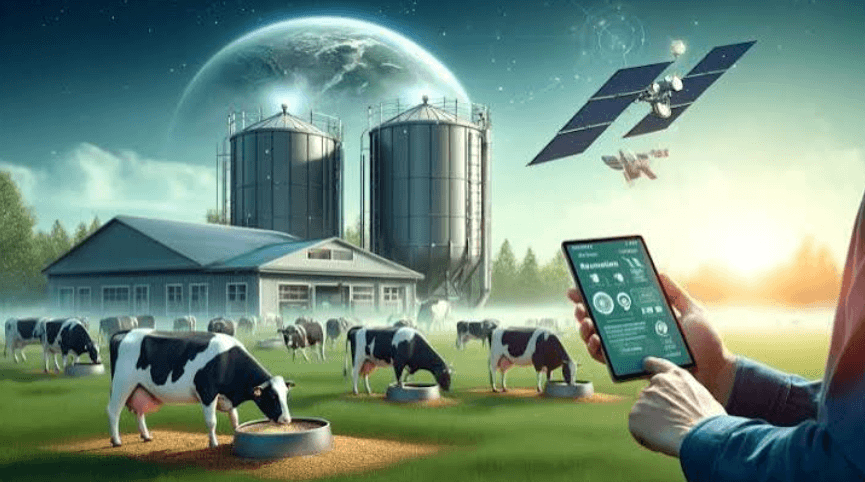
Artificial intelligence for livestock management integrates continuous data streams from physiology, behavior, and environment to optimize health, welfare, and productivity. It enables anomaly detection, illness forecasting, and precise interventions within modular data infrastructures governed by ethics and interoperability. Real-time feeding and welfare decisions adapt to intake, forage quality, and rumen parameters, while governance and phased adoption address trust and scalability. The implications for ROI, risk, and implementation remain nuanced, inviting careful scrutiny as stakeholders plan further steps.
How AI Transforms Livestock Health Monitoring
Artificial intelligence enhances livestock health monitoring by enabling continuous, data-driven assessment of physiological and behavioral indicators. This approach aggregates sensor streams, feed efficiency metrics, and environmental context to detect anomalies, predict illness onset, and optimize interventions.
Interdisciplinary collaboration ensures robust models, validation, and governance. Considerations include ethics and privacy and data interoperability to align trust, transparency, and seamless sharing across systems and stakeholders.
Implementing AI-Driven Feeding and Welfare Management
The integration of AI-driven feeding and welfare management builds on prior health-monitoring insights by extending data streams to include precise intake metrics, forage quality, and environmental drivers of welfare outcomes.
Systems coordinate nutrition forecasting with real-time intake, rumen parameters, and behavioral indicators, enabling genetic optimization and adaptive rations.
Interdisciplinary analytics align welfare objectives with performance, sustainability, and farmer autonomy.
Choosing the Right AI Tools and Data Infrastructure
How should a farmed livestock operation select AI tools and establish data infrastructure to support scalable, reliable decision-making? A disciplined evaluation framework compares model capability, latency, and explainability across domains, ensuring data governance and data interoperability guide tool selection. Architectures favor modular pipelines, standardized formats, and metadata tracing. Cross-disciplinary collaboration aligns welfare, nutrition, and production metrics with auditable, scalable infrastructure choices.
Real-World Adoption: Pitfalls, ROI, and Practical Steps
Real-world adoption hinges on translating robust evaluation into tangible returns, with attention to both economic and welfare outcomes across production, health, and environmental metrics.
Projects must balance ROI with ethics considerations and data ownership, ensuring transparent governance.
Pitfalls include integration costs, data quality, and operator training; practical steps emphasize phased pilots, cross-disciplinary dashboards, and rigorous post-implementation monitoring for sustained, measurable impact.
Frequently Asked Questions
How Do AI Models Handle Data Privacy in Livestock Farms?
Data privacy is maintained through controlled data aggregation, access auditing, and differential privacy techniques; models emphasize interpretability, enabling stakeholders to verify decisions. The approach fuses veterinary science, data ethics, and engineering to support transparent, freedom-respecting farm analytics.
Can AI Reduce Antibiotic Usage Without Compromising Health?
AI can reduce antibiotic usage without compromising health, by optimizing treatments through precision monitoring, early disease detection, and targeted interventions; between ecosystem monitoring and ethical trade offs, data-driven models balance animal welfare with sustainable farming and farmer autonomy.
What Are Hidden Costs Beyond Software Licenses?
Hidden costs beyond licenses include ongoing maintenance contracts, data storage scaling, hardware refresh cycles, integration with legacy systems, cybersecurity measures, compliance audits, staff training, and vendor dependency risks; these factors shape cost trajectories and data interoperability across disciplines.
How to Measure Welfare Outcomes With AI Beyond Metrics?
Measuring welfare with AI extends beyond metrics, enabling continuous monitoring, anomaly detection, and longitudinal trends, while addressing ethical considerations through transparency, bias mitigation, and stakeholder inclusivity in domain-specific, data-driven analyses that honor autonomous decision-making and animal welfare.
Which Regulatory Hurdles Affect Ai-Driven Livestock Decisions?
Euphemistically, regulatory exposure shapes governance. The question concerns regulatory compliance burdens and data stewardship, where livestock data governance interfaces with risk assessments, transparency mandates, and cross-border standards, guiding AI-driven decisions while balancing innovation, ethics, and freedom in practice.
See also: rapidesgains
Conclusion
In sum, the fusion of sensors, models, and governance casts a reliable beacon through the barnyard’s data wind. The system’s pulses—health signals, intake patterns, environmental cues—echo like a chorus of measured breaths, guiding proactive care. As interdisciplinary teams translate metrics into actionable interventions, farming becomes a calibrated ecosystem, where prior anomalies fade into predictable patterns. Theidas-like clarity emerges: responsible AI, transparent data, and disciplined adoption illuminate a future of healthier herds and steadier yields.